Skilled volunteering is one of the highest-impact levers in corporate social impact. It's also one of the most underused. Most workplace programs default to what's easiest to organise, a morning of physical activity, a collection drive, a charity golf day. Skilled volunteering asks something different: what if your team gave the thing they're actually best at?
Here's everything you need to understand it, pitch it, and build it into your calendar.
What is skilled volunteering?
Skilled volunteering means contributing professional expertise to help a nonprofit, community organisation, or social enterprise solve a real problem.
A marketing manager could design a nonprofit's digital campaign strategy. A financial analyst might create a simple budgeting or forecasting tool. An HR professional could develop a recruitment or onboarding framework for a social enterprise. A project manager could facilitate a planning session for a grassroots community group that's never had one.
The organisations on the receiving end often describe this kind of support as transformational because these hours can often unlock more opportunities for greater impact.
Map skills and capabilities
A useful starting point is to map internal capability against the kinds of tasks charities consistently struggle to resource:
- Finance and accounting: Budget reviews, grant acquittals, financial modelling.
- Marketing and communications: Campaign strategy, copywriting, brand refresh, social media.
- HR and people: Recruitment support, policy review, onboarding design
- Legal: Contract review, governance advice, compliance support.
- Technology and data: Website builds, database setup, data visualisation, analytics.
- Strategy and consulting: Business planning, program evaluation, stakeholder mapping.
- Project management: Event coordination, process documentation, program planning.
Note this isn't an exhaustive list. The most effective skilled volunteering happens at the intersection of what employees are good at and what a specific organisation genuinely needs.

From capability to action: shorter ways to start
You don't need a six-month project to make skilled volunteering meaningful. Some of the most effective formats are the ones that get your team in the room. Here's a menu to work from:
Quick wins (1 to 3 hours, any team size)
- The expert hour: One employee, one nonprofit, one hour on a live problem. Think pitch feedback, grant review, or a hiring brief.
- Policy review: A small legal, HR or compliance team reviews and redrafts a nonprofit's volunteer agreement, privacy policy or safeguarding framework in a single session.
- The data drive: A data or analytics team spends half a day cleaning, analysing or visualising a nonprofit's program data. These spreadsheets can provide insights they can use in a funding application.
Half to full day (5 to 8 hours, team of 5–20)
- Hackathon: Teams tackle a real nonprofit challenge in a day. Structured ideation, cross-functional collaboration, and a deliverable at the end.
- Mock pitch panel: Employees act as a mock investment committee or grant panel, giving emerging nonprofits or social enterprises structured feedback on their funding pitch before they go live.
Ongoing (weeks to months, small cohort)
- The skills sprint: A scoped 2–4 week engagement with a clear brief and a single deliverable such as a financial model, an HR framework. Treat it like a client project from day one.
- Expertise exchange Employees mentor charity staff on business skills and charity leaders brief employees on the realities of community need. Two-way knowledge transfer that tends to change how your people think about their own work.
- Charity board advisor: Pair experienced employees with emerging nonprofits as board advisors or observers. This is one of the highest-impact contributions a senior employee can make.

Match employees to opportunities
Getting the match right is the difference between a forgettable afternoon and something employees talk about for years:
- Survey your team on skills they'd most like to contribute.
- Work with HR or People & Culture to map internal capability against your program's focus areas.
- Start with a single department pilot before scaling.
- Brief your charity partner well in advance with discovery meetings.
- Set clear deliverables and timeframes from the start.
- Pair senior and junior employees where possible. Skilled volunteering is a genuine development opportunity for early-career staff.

Building it into your program calendar
Kickstart skilled volunteering at your workplace and build it into your program calendar by considering the following:
- Map it to key dates. For example, World Refugee Day (20 June) and NAIDOC Week (5–12 July) all create natural hooks for a structured activation.
- Include it in onboarding as new starters are often the most motivated to participate and it sets a strong cultural tone early.
- Track skilled hours separately from general volunteering, they carry different weight in ESG and CSR reporting and deserve to be recognised as such.
- Close the loop. Ask the nonprofit for a brief impact summary and share it internally. Nothing drives repeat participation like visibility of what the contribution actually achieved.
- Don't let perfect be the enemy of good. A three-hour workshop delivered by your marketing team may be what is needed to kick off skilled volunteering before scoping out what a six-month engagement with the charity could look like.

From activation to partnership
Running a hackathon or a skills sprint is a strong start. The organisations that get the most out of skilled volunteering are those that take the time to build a genuine partnership.
Many charities don't arrive at a relationship knowing exactly what they need help with. They know something isn't working such as fundraising feels stuck, their comms aren't landing, their data is a mess. However, they haven't had the headspace or outside perspective to name it clearly. Walking in with a predetermined scope of work can miss the point entirely.
The most effective partnerships start with a discovery conversation. Just a genuine sit-down to understand where the organisation is, what's blocking growth, and where outside expertise could move the needle. From that conversation, the work tends to find itself.
A few principles to guide the shift:
- Start with their agenda, not yours. Ask what they're most worried about and what they'd most like to change. The answer is rarely what you expected.
- Name the blocks together. Help them distinguish between a symptom and a cause before you start solving anything.
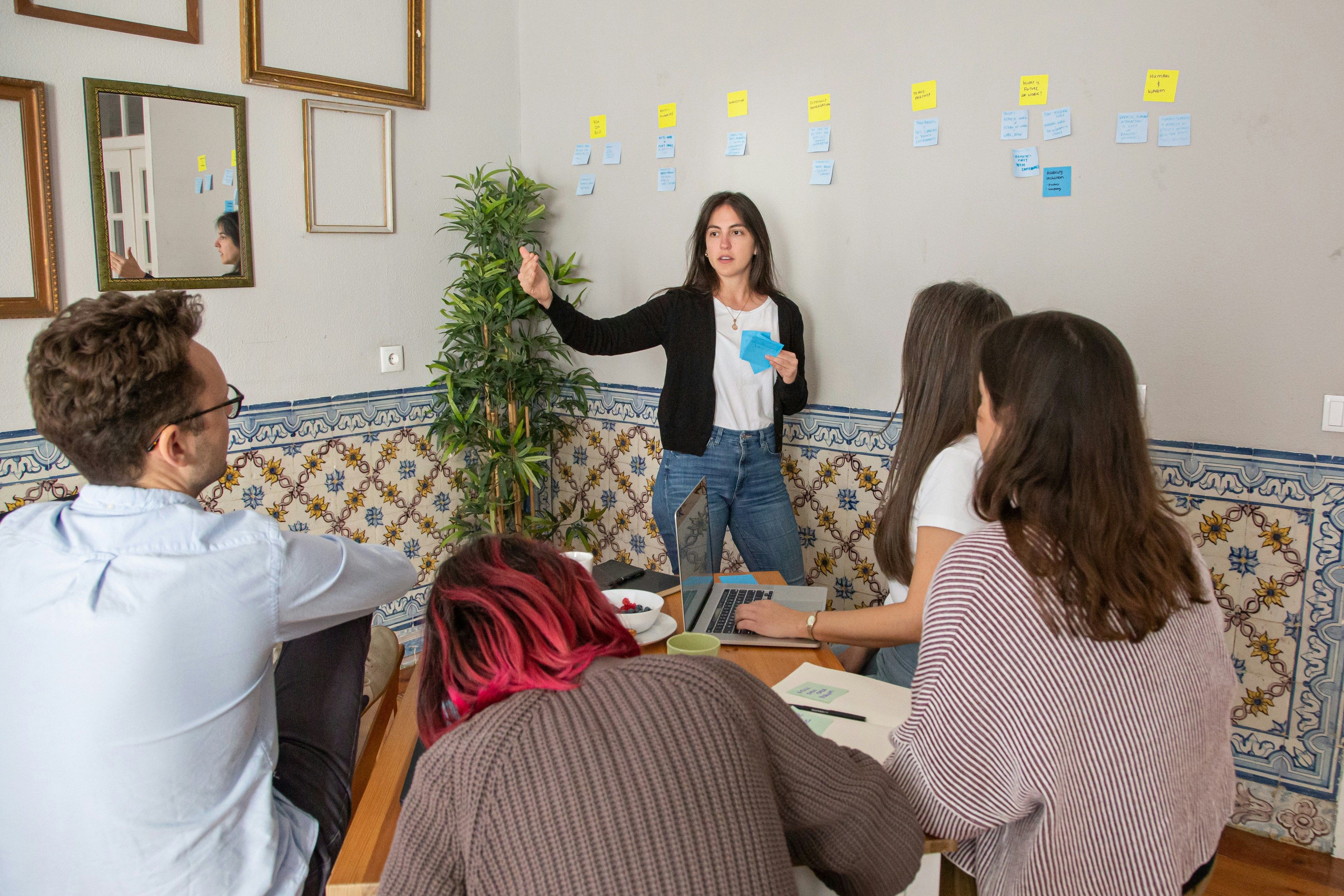
- Ideate before you execute. A structured session with staff from both organisations in the room almost always surfaces something more useful than either party would have designed separately.
- Build in continuity. Agree on a check-in rhythm such as a quarterly call. Relationships that have a next step stay alive.
The goal is a relationship where both organisations are genuinely better for knowing each other and where the community on the receiving end can feel the difference.
Ready to build a skilled volunteering program that actually sticks? Book a strategic review with the Catalyser team and we'll help you design something worth doing.